Top Grass Wall Panel Suppliers for Global Buyers
Choosing reliable Grass Wall Panel suppliers can shape the appearance, safety, and long-term value of a commercial project. Global buyers often compare far more than product photographs. They review material density, backing quality, color consistency, fire performance, packaging, and delivery reliability. A realistic supplier assessment begins with samples, not promises.
This guide introduces leading Grass Wall Panel suppliers serving international buyers and explains what makes them worth closer review. It considers manufacturing experience, export capability, customization options, minimum order quantities, and after-sales support. Details matter. A panel that looks lush in a showroom may shed fibers after installation or fade beside a sunny window. Buyers should request technical sheets, test reports, installation instructions, and recent project references before placing large orders.
Small checks prevent expensive surprises.
The selection process also recognizes that no supplier ranking is perfect. Factory capacity can change, certifications may require verification, and quoted lead times can shift during peak seasons. That uncertainty deserves attention rather than polished language. Suppliers with transparent communication, traceable materials, consistent quality control, and secure export packaging usually offer stronger purchasing confidence. Whether the project involves hotel walls, retail displays, offices, or outdoor sheltered areas, the right partner should match the product to the environment. This introduction provides a practical starting point for comparing Grass Wall Panel manufacturers with professional judgment, documented evidence, and reasonable caution.
Define Artificial Grass Wall Panels: PE/PP Fibers, Backings, and UV Ratings
Top Grass Wall Panel Suppliers for Global Buyers
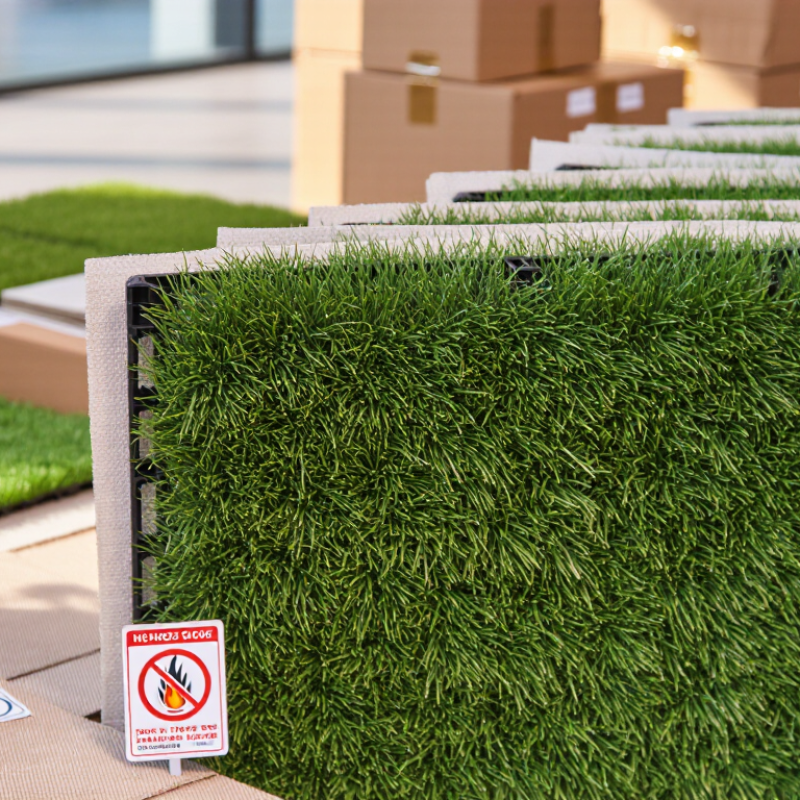
Artificial grass wall panels are modular decorative surfaces made with synthetic blades, backing fabric, and a supporting grid. Most blades use polyethylene (PE) or polypropylene (PP) fibers. PE usually feels softer and looks more natural, while PP offers firmer texture and often lower cost. Fiber shape also matters: curled, flat, and multi-tone blades reflect light differently on a wall.
The backing keeps each tuft anchored. Common constructions include woven fabric, nonwoven felt, and plastic mesh. Mesh backings drain quickly and reduce panel weight, which helps during installation. Felt can hide the wall more completely but may hold moisture in damp conditions. I check tuft density, backing flexibility, and attachment points by hand. Product photos are not enough.
UV performance needs careful reading. There is no single global “UV rating” for every artificial grass panel. Suppliers may reference accelerated weathering methods such as ISO 4892-3 or ASTM G154. These tests expose samples to ultraviolet light, heat, and moisture. They do not perfectly reproduce every climate. According to Grand View Research’s 2024 artificial turf report, the global market was valued at about USD 4.7 billion in 2023, with continued growth expected through 2030. That growth increases specification claims, sometimes too confidently. A stated service life of five years may change under intense sunlight, salt air, or poor installation. Ask for test conditions, color-retention data, and warranty exclusions before comparing suppliers.
Top Grass Wall Panel Suppliers for Global Buyers
Define Artificial Grass Wall Panels: PE/PP Fibers, Backings, and UV Ratings
The chart compares typical density ranges for polymers commonly used in artificial grass wall panels. PE fibers are generally soft and flexible, while PP fibers are slightly lighter and more rigid. Backing materials may also use PP or PVC, depending on dimensional stability and installation requirements. UV performance is not defined by polymer type alone; global buyers should request the UV stabilizer specification and test method, such as ISO 4892 or ASTM G154, together with exposure hours and color-retention results.
Reference values are generalized engineering ranges for commercially used polymers. Actual density varies by grade, fillers, pigments, and formulation.
Compare Supplier Capacity: MOQ, 20–45-Day Lead Times, and Export Reach
For global buyers, supplier capacity means more than a large catalog. It shows in MOQ, production timing, and export handling. A practical comparison starts with the minimum order quantity. Some factories accept 50 panels for a trial shipment, while others require 300 or more. Ask whether the MOQ applies per color, texture, or full container. That detail changes the real cost quickly.
Lead times between 20 and 45 days are common for custom grass wall panels. The shorter figure may cover standard designs only. Custom backing, fire-performance paperwork, or special packaging can extend production. Request a dated production schedule, not a general promise. Confirm when the clock starts: deposit receipt, artwork approval, or material confirmation. I have seen avoidable delays begin with one unapproved sample.
Export reach should be measured by evidence. Check recent shipping documents, destination experience, pallet dimensions, and damage-control methods. A capable supplier should explain carton strength, moisture protection, and replacement procedures. Ask for monthly output during peak season, not just average capacity. Capacity data can be optimistic. I once trusted a polished spreadsheet too quickly; the factory handled samples well but struggled with a larger order. A small pilot shipment, independent inspection, and clear tolerance sheet reduce that risk. Buyers should still leave buffer time for port congestion and revisions.
Top Grass Wall Panel Suppliers for Global Buyers - Compare Supplier Capacity: MOQ, 20–45-Day Lead Times, and Export Reach
| Anonymous Supplier Profile | Primary Grass Panel Type | MOQ
(m²) | Standard Lead Time
(Days) | Monthly Capacity
(m²) | Export Experience
(Markets) | Customization Capability | Typical Shipping Options | Best Fit |
| Profile A | Decorative artificial grass wall panels | 50 | 20–25 | 8,000–12,000 | 20+ | Standard colors, panel dimensions, backing options, and private-label packaging | FOB, CIF, and door-to-door freight coordination | Trial orders |
| Profile B | UV-resistant outdoor greenery panels | 100 | 30–35 | 15,000–25,000 | 35+ | UV-stabilized materials, custom layouts, mixed cartons, and project packaging | FOB, CIF, DDP, and container-load shipments | Outdoor projects |
| Profile C | High-density premium grass panels | 200 | 35–45 | 25,000–40,000 | 45+ | Bespoke textures, fire-performance options, custom tooling, and large-project color matching | FOB, CIF, full-container, and consolidated cargo | Commercial rollouts |
| Profile D | Modular moss and grass feature panels | 80 | 25–35 | 6,000–10,000 | 25+ | Interlocking modules, mixed designs, retail-ready cartons, and display samples | Air freight, LCL, and standard ocean freight | Retail buyers |
| Profile E | Lightweight indoor acoustic greenery panels | 150 | 30–40 | 10,000–18,000 | 30+ | Acoustic backing, custom panel sizes, branded cartons, and installation kits | LCL, FCL, and project-based delivery scheduling | Interior fit-outs |
| Profile F | Budget decorative grass tiles | 300 | 20–30 | 30,000–50,000 | 40+ | Limited color changes, standard molds, bulk cartons, and simple packaging customization | FOB, CIF, and full-container shipments | High-volume sourcing |
Note: Figures are anonymized market-benchmark ranges for preliminary supplier comparison. Confirm current MOQ, production capacity, compliance documents, freight terms, and delivery dates directly before placing an order.
Verify Sustainability: ISO 14001, REACH Compliance, and Recycled Content
Top Grass Wall Panel Suppliers for Global Buyers
For global buyers, sustainability claims need more than attractive product photos. Ask suppliers for a current ISO 14001 certificate and check its issuing body, validity, and certification scope. The certificate should cover relevant manufacturing activities, not only an unrelated office. It demonstrates an environmental management system, but it does not automatically prove every panel is sustainable.
REACH compliance requires product-specific evidence. Request recent declarations, laboratory reports, and information about substances of very high concern. Check whether the documents match the exact panel, backing material, adhesive, and production batch. Recycled content also needs clarity. Confirm the percentage, source, and whether it is pre-consumer or post-consumer material. Chain-of-custody records or independent verification add confidence. Ask for samples. Details matter.
Tips: Compare documents with the physical sample and purchase specification. A green label can hide mixed materials or vague percentages. Request traceability from raw material to shipment. Review packaging, fire-performance data, and maintenance instructions too. I have found that suppliers sometimes provide valid certificates with incomplete product details. That gap deserves questions, not assumptions. Perfect documentation is uncommon, and buyers should record unresolved points before placing a large order. Test a small batch first.