How to Choose the Right 20ft Refrigerated Container for Your Needs?

In today's global economy, transporting goods safely and efficiently is crucial. The demand for temperature-controlled solutions has surged. According to a report by Research and Markets, the refrigerated container market is expected to grow by 5.2% annually through 2025. Choosing the right 20ft refrigerated container is essential for businesses in various industries, including food and pharmaceuticals.

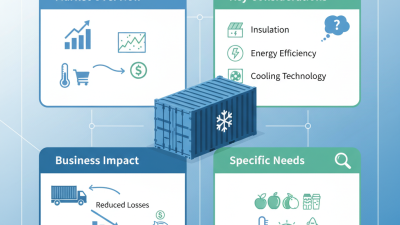
A 20ft refrigerated container provides a versatile option for shipping perishable goods. These units are designed to maintain consistent temperatures while being cost-effective. However, selecting the perfect refrigerated container can be challenging. Businesses may overlook factors like insulation quality, energy efficiency, and loading capacity. Inadequate attention to these details can lead to significant product loss, compromising profitability.

Moreover, the features of a 20ft refrigerated container should align with specific needs. Some may require advanced monitoring technologies, while others might focus on basic refrigeration. Understanding your unique requirements is vital. This decision can dramatically impact operational efficiency and customer satisfaction. Therefore, careful consideration is necessary, as the right choice will ultimately reflect in the bottom line.

How to Choose the Right 20ft Refrigerated Container for Your Needs?

Understanding Your Refrigeration Needs

When choosing a 20ft refrigerated container, it's essential to understand your specific refrigeration needs. Consider the types of goods you intend to store. Different products have distinct temperature requirements. For instance, some may need freezing conditions, while others thrive at slightly higher temperatures. Mapping out your inventory helps streamline your choice significantly.

Think about the duration for which you require refrigeration. Are you storing items short-term or long-term? This impacts the container's efficiency and design. Environmental conditions also play a role. If you are in a hot climate, the container will need to work harder, affecting your energy costs. There are no one-size-fits-all solutions. Reflecting on these specifics will guide you in the right direction.

You may find that your initial decisions need tweaking. Maybe the container you chose doesn’t hold all your products as expected. Or perhaps the cooling system isn’t efficient enough. These insights help refine your choices in the future. Make sure to adapt your plans as your needs evolve. Analyzing what worked and what didn’t will lead to better decisions down the line.
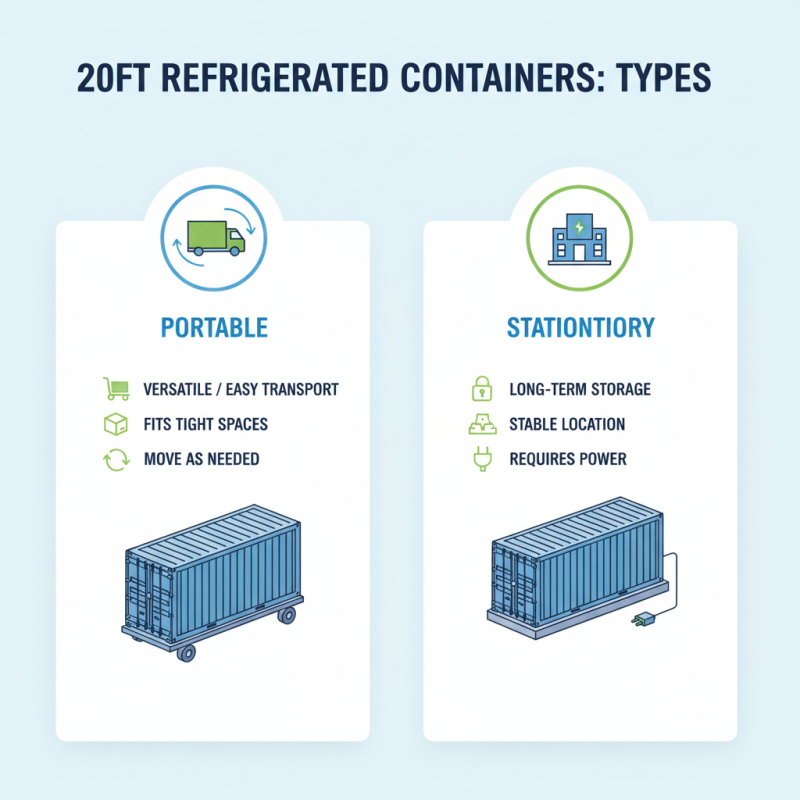

Comparing Types of 20ft Refrigerated Containers

How to Choose the Right 20ft Refrigerated Container for Your Needs?

When selecting a 20ft refrigerated container, it's crucial to explore different types. There are two main categories. The first is the portable refrigerated container. These are versatile and easy to transport. They fit into tight spaces and can be moved as needed. The second type is the stationary refrigerated container. This option is typically used for long-term storage. It requires a stable location and power supply.

Each type has its own advantages and disadvantages. Portable containers may have limited cooling capabilities. Their size can also restrict the amount of goods stored. Stationary containers, on the other hand, offer more storage space. However, they may require additional setup and installation. It's a balance between flexibility and efficiency.

Consider your specific needs carefully. Reflect on what you plan to store. Think about the duration, volume, and required temperature. This reflection is essential. It helps clarify whether flexibility or capacity matters more in your situation. Ultimately, your choice hinges on practicalities and logistical constraints.

Assessing Energy Efficiency and Operating Costs

When choosing a 20ft refrigerated container, energy efficiency should be a key focus. Not all containers are built the same. Some use more energy than others, which increases costs. Look for units with efficient cooling systems. These can save money on electricity bills.

Tips: Consider the insulation quality. Good insulation keeps the interior temperature steady. This reduces energy consumption. Furthermore, think about the age of the container. Older models may require more energy to operate effectively.

Operating costs are not just about energy. Maintenance costs matter too. Regular servicing can prevent breakdowns. Downtime is costly. An efficient container might have a higher initial cost but can save money in the long run.

Tips: Always review the manual. Understand its maintenance requirements. If you're unsure, consult with experts. They can provide insights into hidden costs. Keeping an eye on these details can make a significant difference.

Evaluating Space and Storage Capacity Requirements

When choosing a 20ft refrigerated container, space and storage capacity are crucial. A standard 20ft container offers approximately 1,170 cubic feet of space. But not all that space is usable. Depending on the type of goods, the required airflow can limit storage capacity. For instance, fresh produce needs more room for circulation than frozen goods.

Reports show that nearly 24% of users underestimate their space needs. This can lead to overloading, which compromises temperature control. Each type of cargo demands different conditions. Perishable goods usually require a temperature range between 32°F and 41°F. Conversely, frozen items need below 0°F.

Take time to assess your inventory. If your products vary widely in requirements, you may need a hybrid solution. Mixing items can lead to spoilage if not carefully monitored. It's important to adapt as your storage needs evolve. Evaluate how often you access your goods too. Frequent access can impact temperature stability.

Space and Storage Capacity Requirements for 20ft Refrigerated Containers

Considering Additional Features and Customizations

How to Choose the Right 20ft Refrigerated Container for Your Needs?

When considering a 20ft refrigerated container, additional features can make a big difference. Think about how you’ll use it. Do you need extra insulation? This can help maintain temperature during hot weather.

Tips: Consider a container with adjustable shelving to optimize space. This feature can help store various products efficiently. Look for options that include alarms. This ensures you’re alerted to any temperature changes.

Customization is vital too. You might want dual temperature zones. This allows for storing different items at separate temperatures. Some containers can come with energy-efficient options. They can save costs in the long run.

Think about the ease of access as well. Doors on both ends can simplify loading and unloading. Be sure to assess what you truly need. Avoid features that you won’t use. It’s easy to get overwhelmed by choices. Focus on what really benefits your operations.